

Quick Answer
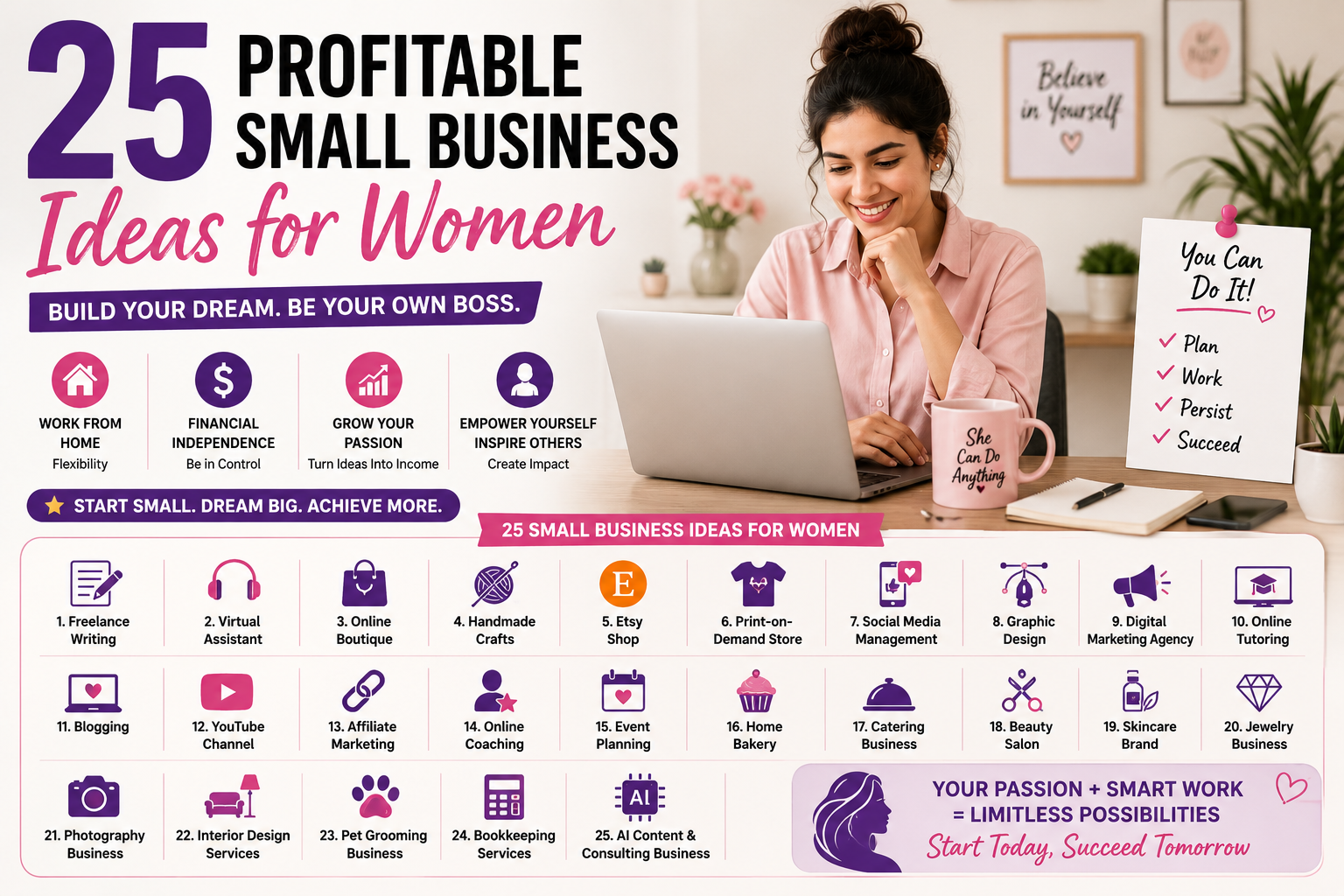
The most profitable small business ideas for women in 2026 include freelance writing, virtual assistant services, online boutiques, social media management, online coaching, home bakeries, photography, and digital product selling. Many of these businesses require little to no startup capital and can be run from home. The best choice depends on your skills, available time, personal interests, and long-term financial goals.
Introduction
Something quietly powerful has been happening in the world of business over the past decade. Women are launching companies, building brands, and creating financial independence at a pace that would have been hard to imagine a generation ago. According to the U.S. Small Business Administration (SBA), women-owned businesses represent a significant and growing share of all U.S. small businesses, employing millions of people and generating billions in annual revenue.
And the trend is accelerating, not slowing down.
The reasons are both practical and personal. Online tools have dramatically lowered the barriers to starting a business. A woman can launch a freelance service, an online shop, or a coaching practice from her living room with little more than a laptop and a plan. Remote work has normalized the idea that professional success doesn’t require a traditional office or a rigid schedule. For mothers, caregivers, and professionals looking for a career shift, these changes have opened doors that simply didn’t exist before.
But let’s be honest about something. Not every business idea is right for every woman. What works beautifully for a graphic designer with a decade of experience looks very different from what works for a stay-at-home mother of three who has two hours of free time each evening. The key is matching the right business model to your specific situation.
That’s exactly what this article is designed to help you do. Whether you’re a student, a professional considering a pivot, a homemaker ready to build something of your own, or an experienced entrepreneur looking for your next venture, there’s something on this list for you. Let’s get into it.
Why Starting a Small Business Is a Great Choice for Women
Starting a business is never a one-size-fits-all decision. But for women specifically, entrepreneurship offers a set of advantages that go beyond just earning more money.
Financial independence. Building your own business means your income isn’t tied to someone else’s decision-making. You set your rates. You decide how much work you take on. Over time, a well-run small business can generate income that significantly surpasses what traditional employment offers.
Flexible work schedule. This is one of the biggest draws, particularly for mothers and caregivers. When you run your own business, you can structure your work around school pickups, family commitments, and personal priorities—rather than the other way around.
Better work-life balance. Not instantly, to be clear. The early stages of any business require real effort. But the long-term potential for a schedule that reflects your actual life values is far greater when you’re self-employed than in most corporate environments.
Low startup costs. Many of the best small business ideas today—especially service-based and digital businesses—require minimal upfront investment. This is particularly valuable for women who may be re-entering the workforce after time away or who don’t have access to large amounts of startup capital.
Working from home. Home-based businesses are no longer niche. They’re mainstream. From bookkeeping to coaching to content creation, many profitable businesses operate entirely from a home office.
Long-term growth potential. Small businesses can evolve. A freelance designer can grow into an agency. A home baker can expand into a catering company. A blogger can launch an online course empire. The ceiling is largely determined by your ambition and strategy, not by an employer’s org chart.
How to Choose the Right Business Idea
Before you commit to any idea, take the time to evaluate it honestly against these criteria. Choosing a business that doesn’t fit your life is one of the most common reasons new ventures stall out.
✅ Business Idea Evaluation Checklist
- Do I have relevant skills or experience in this area?
- Am I genuinely interested in this field long term?
- What is the realistic startup cost, and can I afford it?
- Is there clear, measurable demand for this product or service?
- How much time per day or week can I realistically dedicate?
- What are my specific business goals—extra income, full-time income, legacy?
- Can this business grow and scale over time?
- What is the realistic profit potential in year one, two, and five?
No business idea is perfect. But asking these questions before you invest time and money will save you enormous frustration later.
25 Profitable Small Business Ideas for Women
1. Freelance Writing
Overview: Freelance writers create articles, blog content, email newsletters, website copy, and more for businesses and publications.
Why it’s a good fit: If you have a way with words and strong research skills, this is one of the most flexible and accessible businesses to start. You can work at any hour, from anywhere, around your existing commitments.
Startup cost: Under $50
Skills required: Strong written communication, research, meeting deadlines, adaptability
Income potential: $30,000–$120,000+ per year depending on specialization and client base
Pros: Extremely low startup cost; wide range of industries to serve; fully remote
Challenges: Building a steady client roster takes time; income can be inconsistent early on
Quick tip: Create a simple portfolio using Contently or a basic WordPress site. Then send personalized pitches to five small businesses in your area this week.
2. Virtual Assistant Services
Overview: Virtual assistants provide administrative support to entrepreneurs, executives, and small businesses—managing inboxes, scheduling, research, customer communication, and more.
Why it’s a good fit: If you’re highly organized and enjoy supporting others in running their businesses efficiently, this is an ideal service to offer. Many VAs work part-time hours and manage multiple clients simultaneously.
Startup cost: Under $100
Skills required: Organization, communication, time management, basic technology literacy
Income potential: $25,000–$75,000+ per year
Pros: High demand; low overhead; easy to specialize in a niche (social media VA, executive VA)
Challenges: Can feel repetitive over time; managing multiple clients requires strong systems
Quick tip: Join platforms like Belay, Boldly, or Time Etc. to land your first clients while building your independent reputation.
3. Online Boutique
Overview: An online clothing boutique involves curating and selling fashion items through your own website or platforms like Shopify or Instagram.
Why it’s a good fit: Women with a strong sense of style and an eye for trends can turn that passion into a genuine business. Social media makes product discovery and brand building remarkably accessible.
Startup cost: $500–$3,000 (inventory and website setup)
Skills required: Fashion knowledge, customer service, social media marketing, inventory management
Income potential: $20,000–$200,000+ per year
Pros: Creative and passion-driven; strong community-building potential through social media
Challenges: Inventory management; competitive market; requires consistent marketing
Quick tip: Start small with a curated collection of 20–30 pieces. Use Instagram and TikTok to document your brand story from day one.
4. Handmade Crafts Business
Overview: Handmade business owners create and sell original products—candles, soaps, knitted goods, macramé, pottery, and more—through online platforms and local markets.
Why it’s a good fit: If you already have a creative craft practice, you may be closer to a business than you realize. The handmade market is driven by buyers who specifically want products with character and personal story.
Startup cost: $100–$600 (materials and packaging)
Skills required: Crafting expertise, product photography, pricing strategy, basic e-commerce
Income potential: $10,000–$80,000+ per year
Pros: Creative fulfillment; strong community of makers; multiple sales channels available
Challenges: Time-intensive production; scaling requires either more time or hiring help
Quick tip: Start by selling at two or three local craft fairs to gather real customer feedback before building an online store.
5. Etsy Shop
Overview: Etsy is a marketplace specifically built for handmade goods, vintage items, and digital downloads. Sellers open a shop and list products directly to Etsy’s existing buyer base.
Why it’s a good fit: You get access to millions of buyers without needing to build your own website traffic from scratch. It’s particularly strong for makers, crafters, and digital product creators.
Startup cost: $50–$300
Skills required: Product creation, listing optimization, photography, customer service
Income potential: $10,000–$150,000+ per year
Pros: Built-in marketplace audience; low startup cost; diverse product categories allowed
Challenges: Platform fees; competitive search environment; algorithm changes affect visibility
Quick tip: Use Etsy’s own search bar to research what’s selling. Type your product idea and look at how the top listings are written, priced, and photographed.
6. Print-on-Demand Store
Overview: You design graphics for products (t-shirts, tote bags, mugs, journals), and a print-on-demand company produces and ships each item only when a customer orders it. No inventory needed.
Why it’s a good fit: This model eliminates financial risk from unsold inventory. You focus on design and marketing; the fulfillment side runs itself.
Startup cost: $50–$300
Skills required: Graphic design (Canva works for beginners), niche research, basic e-commerce
Income potential: $10,000–$100,000+ per year
Pros: Zero inventory; passive once established; wide range of products available
Challenges: Lower profit margins; competitive; product quality depends on your supplier
Quick tip: Focus on a tight niche—new teachers, dog moms, nurse practitioners. Specific communities buy enthusiastically when they see themselves reflected in a product.
7. Social Media Management
Overview: Social media managers create content, manage posting schedules, engage with followers, and analyze performance for business clients who don’t have time to do it themselves.
Why it’s a good fit: Women who are naturally comfortable on social platforms and enjoy creative content work tend to thrive in this role. It’s also one of the easier service businesses to run alongside other commitments.
Startup cost: Under $200
Skills required: Platform knowledge, content creation, basic analytics, client communication
Income potential: $30,000–$90,000+ per year
Pros: High demand; flexible hours; strong recurring income potential
Challenges: Platform algorithms change constantly; clients sometimes expect instant results
Quick tip: Specialize in one or two platforms and one industry (restaurants, salons, real estate agents) to position yourself clearly from the start.
8. Graphic Design
Overview: Graphic designers create visual assets for businesses—logos, social media graphics, marketing materials, packaging, and brand identities.
Why it’s a good fit: If you have a creative eye and enjoy visual problem-solving, graphic design offers excellent earning potential and diverse client work.
Startup cost: $200–$800
Skills required: Design fundamentals, typography, color theory, design software proficiency
Income potential: $40,000–$150,000+ per year
Pros: Creative work; strong freelance marketplace; can grow into agency model
Challenges: Competitive field; clients can request excessive revisions without clear contracts
Quick tip: Define your style early. Clients hire designers whose portfolio looks like what they want. Be distinctive, not generic.
9. Digital Marketing Agency
Overview: A digital marketing agency helps businesses grow online through a combination of services including content, social media, email marketing, and paid advertising.
Why it’s a good fit: Women who are strategic thinkers and strong communicators often excel at client-facing marketing work. Starting as a solo consultant and growing into an agency is a well-worn path.
Startup cost: $500–$2,000
Skills required: Marketing strategy, multi-channel expertise, project management, client relations
Income potential: $60,000–$500,000+ per year
Pros: High revenue ceiling; scalable with contractors; recurring monthly retainers
Challenges: Managing client expectations; high responsibility for business results
Quick tip: Start by offering one specific service (like Facebook ads or email marketing) extremely well before expanding your offerings.
10. Online Tutoring
Overview: Online tutors teach academic subjects, language skills, test preparation, or professional development topics through video platforms.
Why it’s a good fit: If you have expertise in any subject area—whether academic, professional, or creative—tutoring lets you share it directly while setting your own hours.
Startup cost: Under $100
Skills required: Subject matter expertise, patience, clear explanation skills, basic video setup
Income potential: $25,000–$80,000+ per year
Pros: Steady demand; fully flexible scheduling; deeply rewarding work
Challenges: Competitive pricing on large platforms; limited earning ceiling without scaling
Quick tip: List on Wyzant or Varsity Tutors to find initial clients, then build a direct client base to avoid paying platform fees long term.
11. Blogging
Overview: Bloggers build content-focused websites around a specific topic—parenting, personal finance, healthy living, travel, home décor—and monetize through advertising, affiliate marketing, and digital products.
Why it’s a good fit: Blogging rewards real-life experience and genuine perspective. Women who have navigated specific life experiences—raising children, managing money on a tight budget, building a career—often have exactly the kind of authentic voice that builds loyal readership.
Startup cost: $50–$200
Skills required: Writing, consistency, basic website management, long-term thinking
Income potential: $5,000–$250,000+ per year (takes time to build)
Pros: Multiple monetization options; can become genuinely passive income over time; builds lasting authority
Challenges: Takes 12–24 months to gain meaningful traction; requires consistent content output
Quick tip: Choose a niche you know from lived experience and publish two articles per week for 12 months before evaluating results.
12. YouTube Channel
Overview: YouTubers create regular video content around a specific niche and monetize through ad revenue, brand sponsorships, affiliate marketing, and their own products or services.
Why it’s a good fit: Women are among the most successful creators on YouTube, particularly in categories like beauty, wellness, parenting, personal finance, education, and cooking. Authenticity and relatability are genuine competitive advantages here.
Startup cost: $300–$1,500
Skills required: On-camera comfort, video editing, storytelling, consistency
Income potential: $10,000–$1,000,000+ per year (highly variable)
Pros: Multiple revenue streams; strong audience connection; powerful personal brand builder
Challenges: Highly competitive; monetization takes time; requires consistent video production
Quick tip: Start with your smartphone and natural lighting. Content quality and consistency matter far more than production value in the beginning.
13. Affiliate Marketing
Overview: Affiliate marketers recommend products and services and earn a commission when someone purchases through their unique referral link. Content is distributed through blogs, social media, newsletters, or YouTube.
Why it’s a good fit: It’s particularly effective for women who have already built a following in a specific niche—parenting, fashion, wellness, personal finance—and want to monetize that trust.
Startup cost: $100–$500
Skills required: Content creation, audience building, authentic product recommendation
Income potential: $10,000–$300,000+ per year
Pros: No product creation or customer service required; passive income potential; flexible
Challenges: Requires an existing or growing audience; income can be inconsistent at first
Quick tip: Only recommend products you genuinely use and trust. Your credibility with your audience is your most valuable business asset.
14. Online Coaching
Overview: Online coaches help clients achieve specific goals in areas like career development, health and fitness, mindset, parenting, relationships, or business strategy through one-on-one or group sessions.
Why it’s a good fit: Coaching is one of the highest-margin service businesses available. If you have valuable experience or training in any area of life, you likely have something worth teaching.
Startup cost: $200–$500
Skills required: Expertise in your coaching area, active listening, empathy, session planning
Income potential: $40,000–$300,000+ per year
Pros: High-margin; deeply fulfilling; scalable through group programs and courses
Challenges: Requires building credibility before clients will pay; certification may be expected in some niches
Quick tip: Offer three complimentary “discovery calls” to potential clients, ask them what they’re struggling with, and use their language to craft your service offering.
15. Event Planning
Overview: Event planners coordinate and execute events—weddings, corporate gatherings, birthday parties, baby showers, and nonprofit galas—managing vendors, logistics, and timelines on behalf of clients.
Why it’s a good fit: Detail-oriented women with strong organizational skills and a calm demeanor under pressure are naturally suited to event planning. The wedding industry alone is an enormous market.
Startup cost: $300–$1,500
Skills required: Organization, vendor relationships, budget management, problem-solving, communication
Income potential: $30,000–$120,000+ per year
Pros: Creative and social work; strong referral potential; can specialize in high-value events
Challenges: Stressful during events; heavily dependent on word-of-mouth and local reputation
Quick tip: Volunteer to plan a friend’s event or a community fundraiser for free. Document everything professionally and use it as your portfolio.
16. Home Bakery
Overview: Home bakers create custom cakes, cookies, pastries, and specialty baked goods for local customers, often operating from a licensed home kitchen.
Why it’s a good fit: If baking is already a passion and your family and friends regularly request your creations, there may well be a paying market for what you’re already making.
Startup cost: $200–$1,000 (equipment, packaging, licensing)
Skills required: Baking expertise, food safety knowledge, pricing, local marketing
Income potential: $15,000–$80,000+ per year
Pros: Low overhead; creative work; strong word-of-mouth potential in local communities
Challenges: Physical labor; cottage food laws vary by state; limited scalability without a commercial kitchen
Quick tip: Check your state’s cottage food laws before you start. Many states allow home bakers to sell certain products without a commercial kitchen license.
17. Catering Business
Overview: Catering businesses prepare and serve food at events—corporate lunches, weddings, private parties, and community gatherings.
Why it’s a good fit: Women with professional cooking skills or extensive home cooking experience who enjoy feeding large groups often find catering deeply satisfying and financially rewarding.
Startup cost: $1,000–$5,000+
Skills required: Culinary skills, food safety certification, logistics management, client communication
Income potential: $30,000–$150,000+ per year
Pros: High-ticket events; strong repeat business potential; clear path to scaling
Challenges: Physically demanding; requires health permits and insurance; seasonal demand
Quick tip: Start by catering small events (10–30 people) for friends and family to build experience and a portfolio before pitching corporate clients.
18. Beauty Salon
Overview: A beauty salon offers services like haircuts, coloring, facials, nail care, waxing, and more—either from a home setup, rented salon chair, or dedicated commercial space.
Why it’s a good fit: Women who are licensed cosmetologists or estheticians already have the core skill set. The beauty industry has consistent, repeat-customer demand.
Startup cost: $500–$10,000+ depending on location and services offered
Skills required: Cosmetology or esthetics license (required), customer service, appointment management
Income potential: $25,000–$100,000+ per year
Pros: Loyal repeat clientele; strong word-of-mouth marketing; can operate from home with permits
Challenges: Licensing requirements vary by state; physical work; managing appointment scheduling
Quick tip: A home salon setup dramatically reduces overhead compared to renting commercial space. Check local zoning and licensing requirements before setting up.
19. Skincare Brand
Overview: Skincare entrepreneurs formulate and sell their own line of natural or specialty skincare products—serums, moisturizers, body butters, and cleansers.
Why it’s a good fit: There is a strong and growing market for clean, natural, and handcrafted skincare, particularly among consumers who are skeptical of large commercial brands.
Startup cost: $500–$3,000 (formulation, testing, packaging, labeling)
Skills required: Product formulation knowledge, understanding of cosmetic regulations, branding, marketing
Income potential: $20,000–$200,000+ per year
Pros: Creative and science-driven; strong e-commerce potential; brand equity builds over time
Challenges: FDA cosmetic regulations must be followed strictly; ingredient sourcing; competitive market
Quick tip: Research cosmetic safety regulations thoroughly before selling. Consider starting with a single hero product rather than launching a full line immediately.
20. Jewelry Business
Overview: Jewelry designers create and sell handmade or curated jewelry collections through Etsy, their own website, local boutiques, and craft markets.
Why it’s a good fit: Jewelry is one of the most consistently popular categories in the handmade goods market. Unique, beautifully photographed pieces with a clear aesthetic tend to build loyal followings.
Startup cost: $200–$1,500 (materials, tools, photography)
Skills required: Jewelry-making skills, product photography, pricing, marketing
Income potential: $15,000–$100,000+ per year
Pros: Creative work; strong social media appeal; multiple sales channels available
Challenges: Time-intensive production; precious material costs can compress margins
Quick tip: Develop a clear, consistent aesthetic before launching. Customers should be able to recognize your pieces across your entire collection.
21. Photography Business
Overview: Photography businesses serve clients across multiple categories—weddings, portraits, newborns, real estate, food, products, and headshots.
Why it’s a good fit: Photography appeals to women who are creative, detail-oriented, and comfortable working directly with people. Wedding and family photography in particular are often relationship-driven businesses that grow through referrals.
Startup cost: $1,000–$5,000 (camera body, lenses, editing software)
Skills required: Photography technique, editing, client communication, business management
Income potential: $25,000–$120,000+ per year
Pros: Creative and meaningful work; strong referral business; multiple specialization options
Challenges: Saturated market in some areas; weekend work common; equipment investment is significant
Quick tip: Specialize early. A photographer known specifically for newborn photography or corporate headshots is easier to refer than a generalist.
22. Interior Design Services
Overview: Interior designers help clients create beautiful, functional living and working spaces—selecting furniture, color palettes, layouts, and décor.
Why it’s a good fit: Women with a natural talent for visual space planning and a passion for home design often discover that this translates directly into a profitable service business.
Startup cost: $300–$2,000
Skills required: Design sensibility, spatial thinking, client consultation skills, project management
Income potential: $35,000–$150,000+ per year
Pros: High client satisfaction; strong word-of-mouth referrals; can offer virtual design services to expand reach
Challenges: Requires building a portfolio; client project timelines can stretch; supplier relationships take time to develop
Quick tip: Offer virtual interior design consultations through platforms like Decorist or Modsy to gain early experience and client reviews.
23. Pet Grooming Business
Overview: Pet groomers provide bathing, haircuts, nail trimming, and styling services for dogs, cats, and other pets—either from a home setup, mobile grooming van, or commercial location.
Why it’s a good fit: The pet industry continues to grow year over year. Women who love animals and have grooming skills can build a loyal, repeat-customer base quickly.
Startup cost: $500–$5,000 depending on setup
Skills required: Grooming training, animal handling, patience, business management
Income potential: $25,000–$80,000+ per year
Pros: High repeat-customer rate; strong community demand; mobile option reduces overhead
Challenges: Physically demanding; some animals can be challenging to handle; certification recommended
Quick tip: A mobile grooming setup eliminates the need for retail space and allows you to serve clients at their homes, which many pet owners prefer.
24. Bookkeeping Services
Overview: Bookkeepers manage financial records, reconcile accounts, process invoices, and prepare reports for small business clients.
Why it’s a good fit: Detail-oriented women with a head for numbers often find bookkeeping deeply satisfying. It’s also a business with very strong, consistent demand—every business needs accurate financial records.
Startup cost: $200–$800
Skills required: Numerical accuracy, accounting software proficiency, confidentiality, attention to detail
Income potential: $35,000–$90,000+ per year
Pros: Stable and recurring monthly income; trusted professional relationships; work-from-home friendly
Challenges: High responsibility for accuracy; requires ongoing education as tax laws evolve
Quick tip: Earn a QuickBooks certification or AIPB bookkeeping certification to build immediate credibility with prospective clients.
25. AI Content & Consulting Business
Overview: This business helps companies plan, produce, and optimize content by combining human creativity, editorial judgment, and modern productivity workflows. Consulting services focus on helping businesses streamline operations and improve efficiency.
Why it’s a good fit: Women with backgrounds in writing, marketing, communications, or business consulting can quickly build authority in this space. The demand for skilled human oversight of content and business processes is growing, not shrinking.
Startup cost: $200–$800
Skills required: Content strategy, editing, business analysis, client communication, project management
Income potential: $50,000–$200,000+ per year
Pros: High demand; scalable with a team of contractors; recurring retainer income
Challenges: Requires staying current with rapidly evolving tools and platforms; competitive
Quick tip: Position yourself around a specific industry vertical—healthcare, legal, real estate—where content accuracy and compliance matter most.
Best Business Ideas by Budget
| Budget | Recommended Business Ideas |
|---|---|
| Under $100 | Freelance writing, virtual assistant services, online tutoring, affiliate marketing (content-focused) |
| Under $500 | Graphic design, social media management, blogging, handmade crafts, print-on-demand, Etsy shop |
| Under $1,000 | Online coaching, photography, event planning, home bakery, bookkeeping services |
| Above $1,000 | Online boutique, catering business, beauty salon, skincare brand, pet grooming, digital marketing agency |
Essential Tools for Women Entrepreneurs
| Category | Recommended Tools |
|---|---|
| Accounting | QuickBooks, FreshBooks, Wave (free) |
| Website Building | WordPress, Squarespace, Shopify |
| Graphic Design | Canva, Adobe Express, Figma |
| Social Media Management | Buffer, Later, Hootsuite |
| Email Marketing | Mailchimp, ConvertKit, Flodesk |
| Online Meetings | Zoom, Google Meet, Calendly |
| Productivity | Notion, Trello, Asana |
| Payment Processing | Stripe, PayPal, Square |
Common Mistakes to Avoid
Starting without research. Assuming there’s a market for your product or service without actually confirming it is one of the most expensive mistakes a new business owner can make. Talk to potential customers before you invest.
Poor financial planning. Mixing personal and business finances from day one creates accounting headaches that compound over time. Open a dedicated business bank account as soon as you start.
Ignoring branding. Your business name, logo, colors, and tone of voice create the first impression you make on potential customers. A professional, consistent brand builds trust quickly. A sloppy one undermines it.
Underpricing products or services. This is particularly common among women entrepreneurs. Pricing too low attracts difficult clients, burns you out, and makes it nearly impossible to build a sustainable business. Research what competitors charge and price your work accordingly.
Trying to do everything alone. You don’t have to. Hiring a virtual assistant, an accountant, or a marketing contractor for specific tasks frees you to focus on the work that actually generates revenue.
Not marketing consistently. Building something excellent and waiting for customers to find you rarely works. Consistent, strategic marketing—whether through social media, content, networking, or referrals—is what fills your pipeline.
Expert Tips for Growing a Successful Business
Finding your first customers. Your existing network is your first market. Tell everyone what you’re doing. Post about it on your personal social media. Ask friends and former colleagues directly. Your first customer is almost always someone you already know or someone they know.
Building a personal brand. People buy from people they trust. Share your expertise generously—on Instagram, LinkedIn, or in a newsletter. Over time, showing up consistently in your area of expertise builds authority that brings clients to you without constant outreach.
Using social media effectively. You don’t need to be on every platform. Choose one or two where your ideal customers actually spend time, and show up there consistently. Depth beats breadth every time.
Managing finances. Track every business expense from day one. Understand your profit margins. Know your break-even point. Financial clarity isn’t just good practice—it’s what allows you to make smart decisions about growth.
Networking. The U.S. Women’s Business Centers (WBC), local chambers of commerce, and industry-specific groups are all valuable networking resources. Relationships with other business owners often lead to referrals, partnerships, and mentorship.
Scaling the business sustainably. Growth for its own sake isn’t a strategy. Scale when your current capacity is genuinely maxed out and demand is consistent. Add team members or automation incrementally, and protect your cash flow at every stage.
Frequently Asked Questions
1. What is the easiest business to start for a woman with no experience?
Freelance writing, virtual assistant services, and online tutoring have the lowest barriers to entry. They require skills you likely already have and can be started with minimal investment.
2. Can I start a business while working full time?
Absolutely. Many successful women entrepreneurs started their businesses part-time alongside existing jobs. Service-based businesses and content-focused models are particularly manageable with 10–15 hours per week of dedicated effort.
3. What businesses can I run from home?
Freelance writing, virtual assisting, graphic design, online coaching, bookkeeping, blogging, social media management, and digital product selling can all be run entirely from home.
4. Do I need a business license to start a small business?
Requirements vary by location, business type, and the services you offer. In the U.S., most states require at least a basic business registration. Check with the SBA or your local Small Business Development Center (SBDC) for guidance specific to your state.
5. How much money can I realistically make from a small business?
This varies enormously based on the business model, your level of effort, and market demand. Most new businesses generate modest income in year one and grow from there. Avoid any opportunity that promises guaranteed or instant income.
6. What is the most profitable small business for women?
Digital marketing agencies, online coaching, and content-based businesses have some of the highest profit margins. But profitability depends more on execution and positioning than on the idea itself.
7. Are there grants or funding options specifically for women-owned businesses?
Yes. The SBA’s Women’s Business Centers (WBCs) offer resources, counseling, and information about funding. Organizations like Amber Grant, Tory Burch Foundation, and Cartier Women’s Initiative also provide grants and support to women entrepreneurs.
8. How do I find my first clients?
Start with your personal and professional network. Tell people what you’re doing. Post on LinkedIn and social media. Join relevant online communities. Offer a discounted or complimentary first project to build testimonials and referrals.
9. Do I need a website to start a business?
Not necessarily at first. Many successful small businesses start on social media platforms or marketplace platforms like Etsy or Upwork. However, having your own website builds long-term credibility and removes dependence on third-party platform rules.
10. How do I balance running a business with family responsibilities?
This is one of the most real challenges women entrepreneurs face. Setting clear working hours, creating structured routines, and communicating boundaries with family members all help. Many successful women business owners also emphasize the importance of asking for help—from partners, family, or hired support.
Conclusion
Twenty-five ideas is a lot to consider, and the right choice is different for every woman reading this. But here’s the thing: you don’t need the perfect idea or the perfect moment to begin. You need the idea that fits your actual life right now—your skills, your budget, your available time, and the kind of work that genuinely energizes you.
The most important step is the first one. Not the perfectly planned launch. Not the professional brand photos or the flawless website. Just one concrete action toward your goal, taken today.
If you’re a skilled writer, reach out to three potential clients this week. If you’ve always made beautiful things by hand, set up an Etsy shop this weekend. If you have expertise that others would pay to learn, book your first coaching call. The version of you that has a thriving business started exactly where you are now—she just didn’t wait.
You have more to offer than you may currently believe. The market is there. The tools are accessible. The only question is whether you’re ready to take it seriously.
Start today. Build from there.
References
- U.S. Small Business Administration (SBA): sba.gov
- SCORE Mentors: score.org
- U.S. Bureau of Labor Statistics — Occupational Outlook Handbook: bls.gov/ooh
- World Bank Small Business Resources: worldbank.org
- Harvard Business Review — Entrepreneurship: hbr.org
- McKinsey & Company — Women in the Workplace: mckinsey.com
- U.S. Women’s Business Centers (WBC): sba.gov/local-assistance/resource-partners/womens-business-centers
Business Disclaimer
This article is intended for informational and educational purposes only. The business ideas, startup costs, earning potential, and strategies discussed are general guidelines and should not be considered financial, legal, tax, or professional business advice. Business success depends on factors such as your skills, experience, market demand, competition, location, and execution. Unlocked The Magazine does not guarantee specific earnings, profits, or business outcomes. Before starting, funding, or expanding any business, conduct thorough research and consult qualified financial, legal, or business professionals to make informed decisions.