

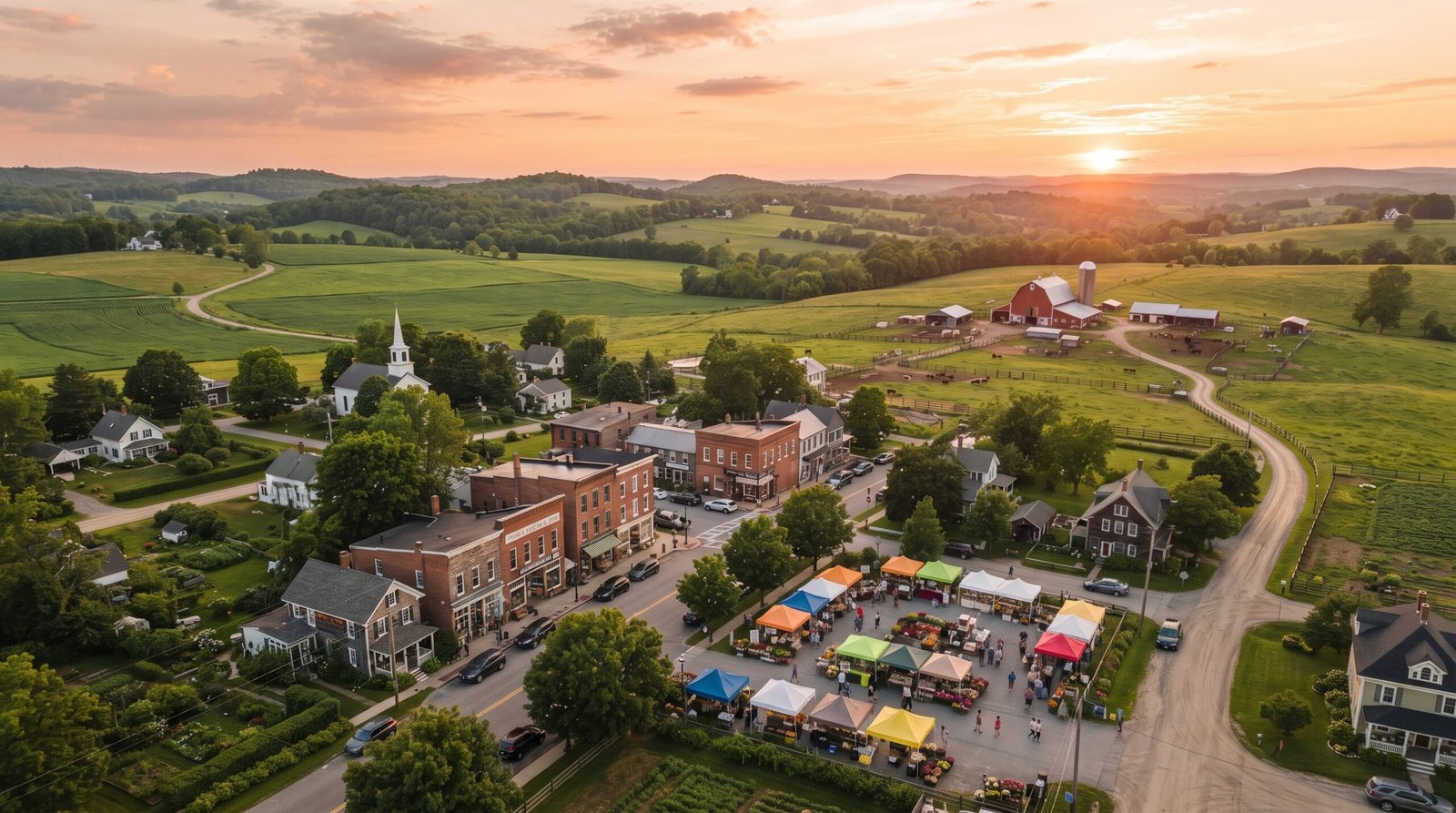
Rural America is experiencing a quiet entrepreneurial renaissance. Far from the crowded startup ecosystems of major cities, small towns and farming communities are becoming fertile ground for determined business owners who understand their local markets and know how to serve them well.
If you live outside a metropolitan area, you already know that small business ideas for rural areas look different from urban ventures. Land is more affordable, competition is often minimal, and tight-knit communities tend to support local businesses with remarkable loyalty. These advantages create genuine opportunities for entrepreneurs willing to think creatively about what their communities actually need.
This guide presents 25 practical business ideas tailored specifically for rural settings. Whether you’re a farmer looking to diversify income, a skilled tradesperson ready to strike out on your own, or someone relocating to the countryside seeking entrepreneurial opportunities, this article gives you the information and direction to move forward with confidence.
What Are Small Business Ideas for Rural Areas?
Small business ideas for rural areas are ventures specifically suited to the economic conditions, demographics, geographic realities, and existing gaps in services found in small towns, agricultural regions, and countryside communities.
These businesses differ from urban business models in important ways. They typically leverage rural assets like land, natural resources, agricultural infrastructure, and close community relationships. They often address service gaps created by the absence of large retail chains, specialized professionals, or urban conveniences.
Rural businesses generally fall into several categories:
- Agriculture-based businesses: Farm stands, specialty crops, agritourism, livestock operations
- Trades and services: Equipment repair, construction, landscaping, transportation
- Retail and food: General stores, specialty food production, mobile food services
- Digital and remote businesses: Online services, e-commerce, consulting, content creation
- Tourism and recreation: Hunting guides, fishing charters, rural bed and breakfast operations
The most successful rural businesses combine community knowledge with entrepreneurial thinking. They solve problems that residents genuinely face rather than importing urban business concepts that don’t fit rural realities.
Why Rural Business Development Matters
Rural communities across the United States face persistent economic challenges. Data from the USDA Economic Research Service – Rural Economy confirms that rural areas have experienced slower economic recovery than urban centers following economic downturns. Population loss, limited employment opportunities, and reduced access to essential services continue affecting millions of Americans living outside metropolitan areas.
Small businesses are the economic backbone of rural communities. They create local employment, keep money circulating within the community, provide essential services, and give residents reasons to invest in their hometowns rather than relocate to cities.
When rural entrepreneurs succeed, communities thrive. Tax revenue supports local schools and infrastructure. Employed residents spend money at other local businesses, creating multiplier effects that strengthen the entire local economy. Successful rural businesses also attract additional investment and encourage others to pursue entrepreneurship.
Beyond economics, thriving local businesses build community identity and social cohesion. The hardware store owner who’s been serving the same families for decades, the farmer who supplies local restaurants with fresh produce, the mechanic who keeps essential farm equipment running—these businesses are woven into the fabric of rural community life in ways that chain stores simply cannot replicate.
Benefits of Starting a Business in a Rural Area
Lower Operating Costs
Commercial real estate in rural areas costs a fraction of urban equivalents. Whether purchasing or renting space, rural entrepreneurs enjoy dramatically reduced overhead that improves profit margins and reduces financial risk.
Minimal Competition
Many rural areas lack adequate services across multiple industries. A single skilled plumber, electrician, or mechanic may serve an entire county without meaningful competition. This scarcity creates strong pricing power and steady demand.
Strong Community Support
Rural residents understand the importance of supporting local businesses. Customer loyalty tends to be exceptional compared to urban markets where consumers shop impersonally across dozens of competing options.
Access to Natural Resources and Land
Entrepreneurs leveraging agriculture, timber, wildlife, or natural beauty have raw materials and settings that urban businesses simply cannot access. These resources form the foundation of unique, location-specific business opportunities.
Government Funding and Support Programs
Both federal and state governments offer specific programs supporting rural business development. The USDA Rural Development program, for instance, provides loans, grants, and technical assistance exclusively for rural businesses and entrepreneurs.
Lower Cost of Living
Personal living expenses in rural areas are typically lower than urban centers, reducing the personal income you need to sustain yourself while building your business.
Challenges and Limitations
Limited Customer Base
Smaller populations mean fewer potential customers. Many rural businesses must think beyond local markets, reaching regional customers or selling online to supplement local sales.
Infrastructure Limitations
Unreliable internet connectivity, limited transportation infrastructure, and distance from suppliers create operational challenges that urban businesses rarely encounter.
Workforce Recruitment
Finding and retaining qualified employees can be difficult in rural areas, particularly for positions requiring specialized skills. This limitation constrains growth potential for some business models.
Access to Capital
Rural entrepreneurs sometimes find it harder to access traditional business financing. Some banks have limited rural presence, and venture capital is virtually nonexistent in rural markets.
Distance from Suppliers and Markets
Rural businesses often pay more for goods and materials due to shipping distances, or must travel further to access wholesale suppliers, reducing profit margins compared to urban competitors.
Seasonal Income Fluctuations
Many rural businesses, particularly agriculture and tourism-related ventures, experience dramatic seasonal revenue swings. Managing cash flow through slow seasons requires careful financial planning.
25 Small Business Ideas for Rural Areas
Agriculture and Food Production
1. Specialty Crop Farming
Grow high-value crops like herbs, microgreens, mushrooms, or specialty vegetables. These crops command premium prices at farmers markets, restaurants, and grocery stores while requiring less land than conventional farming.
2. Farm-to-Table Meal Delivery
Source local ingredients and deliver prepared meal kits or ready-to-eat meals to rural households and small towns within driving distance. This concept appeals to busy families and seniors.
3. Honey Production and Beekeeping
Beekeeping requires modest initial investment and produces multiple revenue streams: honey, beeswax products, pollination services for local farms, and educational workshops.
4. Livestock Raising and Meat Processing
Raise grass-fed beef, heritage breed pigs, or pastured poultry and sell directly to consumers through farm stores, farmers markets, or subscription meat boxes.
5. Farmers Market Vendor
Grow or produce marketable goods and sell them at local and regional farmers markets. Successful vendors often expand to wholesale accounts with local restaurants and grocers.
6. Organic Food Production
Certified organic produce and products command significant price premiums. Organic certification opens access to premium retail channels and health-conscious consumer segments.
Trades and Services
7. Mobile Equipment Repair
Farm equipment and machinery require constant maintenance and repair. A mobile repair service travels to farms, reducing downtime during critical planting and harvest seasons.
Startup Investment: $5,000-15,000
Profit Potential: $60,000-100,000+ annually
8. Well Drilling and Water Services
Rural properties depend on well water. Well maintenance, testing, and drilling services remain in consistent demand across farming communities.
9. Septic System Services
Rural properties with septic systems require regular maintenance, inspections, and repairs. Licensed septic contractors serve essential needs with recurring customer relationships.
10. Firewood Production and Delivery
Many rural and suburban homes use wood-burning stoves and fireplaces. Firewood production and delivery requires minimal investment beyond a chainsaw, wood splitter, and truck.
11. Excavation and Land Clearing
Rural property development, pond creation, driveway installation, and land clearing create steady demand for excavation services. Equipment costs are significant but so is revenue potential.
12. Propane and Fuel Delivery
Rural areas often lack natural gas infrastructure, creating demand for propane delivery services. Fuel delivery businesses generate recurring revenue with relatively captive customers.
Retail and Food
13. Rural General Store
Communities lacking convenient access to everyday goods genuinely need local retail options. A well-curated general store offering groceries, hardware basics, and everyday necessities serves real community needs.
14. Mobile Food Truck or Trailer
Bring food service to communities lacking restaurant options. Rural food trucks can serve multiple small communities, events, and festivals across a wide geographic area.
15. Farm Store and U-Pick Operation
Sell farm products directly to consumers through an on-farm store or u-pick experience. Strawberries, pumpkins, Christmas trees, and apple orchards attract families seeking rural experiences.
16. Hunting and Fishing Supply Shop
Rural areas near hunting grounds or fishing waters support specialty outdoor retail. These stores also generate revenue through licenses, guide referrals, and seasonal events.
Tourism and Recreation
17. Hunting Guide Services
Licensed hunting guides serve increasingly urban hunters who lack private land access and rural knowledge. Quality guide operations command premium rates for deer, turkey, waterfowl, and upland bird hunting.
Startup Investment: $2,000-10,000
Profit Potential: $40,000-80,000+ annually
18. Rural Bed and Breakfast
Convert a farmhouse or rural property into a bed and breakfast operation. Travelers seeking authentic countryside experiences actively seek alternatives to chain hotels, particularly near national parks, scenic areas, and wine regions.
19. Horseback Riding and Trail Services
Establish guided horseback trail rides for visitors. This venture requires horses, insurance, land, and liability management but generates premium revenue from tourists and locals seeking recreational experiences.
20. Agritourism Operation
Transform your farm into a destination. Corn mazes, pumpkin patches, farm tours, educational programs, and seasonal events generate revenue while connecting urban visitors with agricultural heritage.
Digital and Remote Services
21. Rural Internet Services Provider
In areas with poor connectivity, providing reliable internet service addresses a critical community need. Wireless internet service providers (WISPs) serve underserved rural markets with strong customer loyalty.
22. Remote Digital Marketing Services
Offer digital marketing, content creation, or social media management to businesses nationwide. Rural overhead costs allow competitive pricing while maintaining excellent profit margins.
Startup Investment: $300-600
Profit Potential: $50,000-90,000+ annually
23. Online Handmade Goods Store
Create and sell handmade crafts, food products, woodworking, metalwork, or artistic creations through online marketplaces and your own e-commerce website.
Specialty and Niche Businesses
24. Greenhouse and Plant Nursery
Grow and sell plants, seedlings, landscaping plants, and garden supplies to homeowners and landscape contractors. Greenhouses extend growing seasons and allow year-round operations.
25. Custom Woodworking and Furniture
Skilled woodworkers create custom furniture, cabinetry, and decorative items. Rural settings often provide access to local timber and lower overhead costs that urban woodworkers lack.
Comparison Table: Rural Business Ideas at a Glance
| Business Idea | Startup Cost | Profit Potential | Skill Requirement | Time to Revenue |
|---|---|---|---|---|
| Specialty Crop Farming | $2,000-10,000 | High | Medium | 3-6 months |
| Mobile Equipment Repair | $5,000-15,000 | High | High | 1-3 months |
| Beekeeping | $500-2,000 | Medium | Medium | 6-12 months |
| Hunting Guide Services | $2,000-10,000 | High | High | 1-3 months |
| Rural Bed and Breakfast | $5,000-50,000 | High | Low-Medium | 2-6 months |
| Digital Marketing Services | $300-600 | High | High | 1-2 months |
| Farm Store/U-Pick | $2,000-20,000 | Medium-High | Low-Medium | 3-6 months |
| Firewood Production | $1,000-5,000 | Medium | Low | 1-2 months |
| Mobile Food Truck | $10,000-40,000 | Medium-High | Medium | 1-3 months |
| Custom Woodworking | $3,000-15,000 | High | High | 1-3 months |
Best Practices for Rural Business Success
Know Your Community Deeply
The most successful rural entrepreneurs understand their communities intimately. They know what services are missing, which businesses are struggling, and what residents genuinely want. This community knowledge is your competitive advantage. Spend time listening before building.
Diversify Revenue Streams
Dependence on a single revenue source creates vulnerability, particularly in seasonal rural markets. Successful rural businesses develop multiple income streams. A farm sells directly to consumers, supplies local restaurants, and hosts agritourism events. A landscaper adds snow removal in winter. Diversification smooths seasonal fluctuations.
Embrace Technology Selectively
Technology helps rural businesses reach beyond local markets, manage operations efficiently, and compete effectively. But not every technological trend applies to rural realities. Choose tools that genuinely solve your specific operational challenges rather than adopting technology for its own sake.
Build Strong Supplier Relationships
Distance from suppliers creates real challenges. Cultivate strong relationships with vendors who understand rural business needs. Negotiate favorable terms that account for shipping costs and longer lead times.
Participate Actively in Community Life
Rural business success depends partly on community standing. Sponsor local events, support school fundraisers, participate in town organizations, and demonstrate genuine investment in community well-being. This involvement builds the trust and goodwill that sustains local customer relationships.
Plan Cash Flow Carefully
Seasonal revenue patterns require careful financial planning. Maintain sufficient reserves to cover slow seasons and avoid the trap of spending peak-season revenue as though it flows year-round.
Common Mistakes Rural Entrepreneurs Make
Underestimating Distance and Logistics Costs
Rural entrepreneurs consistently underestimate the true cost of transportation, shipping, and logistics. Factor these expenses carefully into pricing and financial projections.
Ignoring Online Market Opportunities
Many rural business owners focus exclusively on local customers, missing the enormous potential of online markets. Even traditional rural businesses benefit from professional websites, social media presence, and e-commerce capabilities.
Overestimating Local Customer Base
A county with 8,000 residents cannot support the same business volume as an urban neighborhood with 50,000 people within walking distance. Realistic customer base assessment prevents costly overinvestment.
Skipping Market Research
Assuming community need without validating demand leads to failed businesses. Talk to potential customers, analyze existing competition, and research similar businesses in comparable rural markets.
Neglecting to Build Emergency Reserves
Seasonal businesses and rural service providers face income volatility. Failing to maintain adequate cash reserves causes businesses to collapse during slow periods that were entirely predictable.
Trying to Compete with Urban Businesses Directly
Rural businesses rarely win on the same terms as their urban counterparts. Instead of competing on selection, price, or convenience against Amazon or Walmart, rural businesses must compete on relationships, local knowledge, specialized expertise, and community value.
Step-by-Step Guide to Starting a Rural Business
Step 1: Identify Community Needs and Opportunities
Survey your community. What services require a 30-minute drive to access? What do residents consistently complain about lacking locally? Where do community members spend money outside the area?
Step 2: Assess Your Resources and Skills
Inventory your personal assets: land, equipment, skills, professional experience, financial resources, and community relationships. The best rural business leverages what you already have.
Step 3: Research Similar Businesses
Study comparable businesses in similar rural markets. Visit, research online, and if possible, speak with owners. Learn from their experiences before investing your resources.
Step 4: Develop a Realistic Business Plan
Document your business concept, target customers, revenue projections, startup costs, and operational plan. Be conservative with revenue estimates and realistic about expenses.
Step 5: Explore Rural Funding Opportunities
Research USDA Rural Development programs, state rural development grants, USDA Farm Service Agency loans, local economic development organizations, and Small Business Administration programs specifically designed for rural entrepreneurs.
Step 6: Handle Legal and Regulatory Requirements
Register your business, obtain necessary licenses, secure appropriate insurance, and understand zoning regulations. Agricultural operations face specific regulations that require careful attention.
Step 7: Set Up Financial Systems
Establish a business bank account, implement bookkeeping from day one, and work with an accountant familiar with rural business and agricultural tax considerations.
Step 8: Create a Community Presence
Before and during launch, engage your community. Announce your business at community gatherings, through local newspapers, and on community social media groups. Rural word-of-mouth is extraordinarily powerful.
Step 9: Launch and Gather Feedback
Open your business and actively solicit customer feedback. Rural customers who feel heard become vocal advocates who send referrals consistently.
Step 10: Refine and Grow Based on Results
Monitor what’s working and what isn’t. Adapt your offerings based on actual customer behavior rather than original assumptions.
Real-World Examples
Example 1: Specialty Mushroom Farm
Tom, a former accountant, purchased 15 rural acres and began growing specialty mushrooms (oyster, shiitake, lion’s mane) in climate-controlled growing rooms. He initially sold at a single farmers market but quickly developed wholesale accounts with restaurants in three nearby small cities. Within three years, his operation generated $180,000 annually from mushroom sales, mushroom cultivation workshops, and growing supplies sold to other aspiring mushroom farmers.
Example 2: Mobile Farm Equipment Repair
Rebecca inherited her grandfather’s mechanical tools and knowledge. She purchased a used service truck, acquired an equipment repair certification, and began serving farmers across two counties who previously waited weeks for equipment service from distant dealers.
During her first planting season, word spread quickly. Farmers who’d watched crops fail waiting for equipment repairs became devoted customers. Within two years, she employed one assistant and generated $95,000 annually, with demand consistently exceeding her available time.
Example 3: Rural Agritourism Operation
The Henderson family operated a struggling grain farm facing diminishing returns from commodity prices. They converted a portion of their operation to agritourism, adding a corn maze, pumpkin patch, hayrides, farm tour programs for school groups, and a farm store selling local products.
By connecting with the USDA Rural Development office for technical assistance and tapping into USDA grants for rural tourism development, they accessed funding that made expansion affordable. Their agritourism operation now generates $140,000 annually, diversifying farm income and reducing dependence on volatile commodity markets.
Expert Tips for Rural Entrepreneurs
Leverage USDA Resources Early
The USDA Rural Development program offers resources most rural entrepreneurs don’t know exist. Business development grants, low-interest loans, technical assistance, and market development programs can dramatically reduce the financial burden of launching.
Join Regional Agricultural and Business Networks
State farm bureaus, rural economic development organizations, and regional chambers of commerce connect rural entrepreneurs with mentors, potential customers, and collaborative opportunities.
Develop Multiple Sales Channels
A specialty food producer selling only at one farmers market is vulnerable. The same producer selling at multiple markets, to grocery stores, through a CSA subscription, and via an online store has stability and growth potential.
Think Regionally, Not Just Locally
Small local markets may not support your business alone. Think of your customer base as regional—perhaps a 50-mile radius—and develop marketing and distribution strategies that reach this larger geographic area.
Use Social Media to Reach Urban Customers
Many rural products and experiences appeal enormously to urban consumers who romanticize rural life. Instagram, Facebook, and YouTube effectively market agritourism, farm products, handcrafted goods, and rural experiences to these eager audiences.
Document Your Story
Rural authenticity is a genuine competitive advantage. Document and share your business story, farming practices, craftsmanship process, and community roots. Authentic storytelling builds emotional connections that sustain customer loyalty.
Future Trends in Rural Business
Remote Work Migration Creating New Customers
The shift to remote work has driven significant migration from cities to rural areas. Newcomers bring urban income levels, different consumer expectations, and entrepreneurial energy that expands rural market opportunity.
E-Commerce Enabling Rural Products to Reach Global Markets
Improved logistics and e-commerce platforms allow rural producers to sell handmade goods, specialty foods, and artisan products to customers worldwide. What was once a local craft business can now serve global niche markets.
Agritourism and Experiential Agriculture Growth
Urban consumers increasingly seek authentic agricultural experiences. Farm stays, working farm visits, harvest festivals, and farm-to-table dining experiences are growing rapidly, creating new revenue opportunities for rural landowners.
Rural Broadband Infrastructure Investment
Federal investment in rural broadband infrastructure will expand internet connectivity across rural America, enabling more digital business models and remote service delivery that was previously impractical.
Regenerative Agriculture Market Development
Consumer demand for sustainably and regeneratively produced food creates premium market opportunities for rural farmers willing to adopt and document these practices.
Rural Health Services Demand
Ongoing shortages of health services in rural areas create opportunities for telehealth coordinators, mobile health services, mental health counselors, and specialized wellness providers willing to serve underserved rural communities.
Frequently Asked Questions
What are the best small business ideas for rural areas with little money?
Several rural business ideas require minimal startup investment. Firewood production ($500-1,500), farmers market vending ($200-500 for initial inventory and booth setup), freelance digital services ($200-400), beekeeping ($500-1,500), and mobile repair services (if you already own relevant tools) are all accessible with limited capital. The USDA Rural Development program also offers microloans specifically designed for rural entrepreneurs with limited financial resources.
How do I find customers for a rural business?
Start with your existing community network, including neighbors, church groups, local organizations, and community events. List your business on Google Business Profile so nearby residents find you through local searches. Create a presence on Facebook, which remains the dominant social media platform in many rural communities. Partner with complementary businesses for referrals. As your reputation grows, word-of-mouth becomes your most powerful marketing tool.
Are there grants specifically for rural businesses?
Yes. The USDA Rural Development program offers several grant programs supporting rural businesses, including the Rural Energy for America Program (REAP), Rural Business Development Grants, and Value-Added Producer Grants for agricultural entrepreneurs. Many states also offer rural economic development grants through their agricultural and commerce departments. Contact your local USDA Rural Development office to explore available programs.
What licenses do I need to start a rural business?
Requirements vary by business type and state. Most businesses require a basic business license from your county or city. Food businesses need food handler permits and may require state agricultural department licensing. Hunting guide services require specific licenses. Construction and trades businesses require contractor licensing. Contact your state’s Secretary of State office and local county government for specific requirements relevant to your planned business.
Can I run an online business from a rural area?
Absolutely. Many online businesses thrive in rural areas where overhead costs are low and personal living expenses are manageable. Digital marketing services, freelance writing, web development, online course creation, and e-commerce all work effectively from rural locations—provided you have reliable internet access. If internet connectivity is limited, rural broadband expansion programs may help; contact your local USDA Rural Development office for information.
How do I deal with seasonal income fluctuations in a rural business?
Financial planning is essential. During peak seasons, build substantial cash reserves targeting at least three months of operating expenses. Develop complementary revenue streams that generate income during your slow season. For example, a landscaping business adds snow removal services in winter; a farm adds agritourism events in fall when crop sales slow. Creating multiple revenue streams that peak at different times of year smooths cash flow significantly.
What rural businesses are most in demand right now?
Currently high-demand rural businesses include mobile health services, broadband installation and support, specialty food production, equipment repair and maintenance, agritourism experiences, and professional services like bookkeeping and legal assistance that residents currently must travel significant distances to access. Remote worker services are also growing as more people relocate from cities to rural areas.
How do I compete with online retailers like Amazon in a rural setting?
Don’t try to compete directly on the same terms. Amazon wins on price and selection; you can’t beat that. Instead, compete on relationships, immediacy, specialized knowledge, community investment, and curated local relevance. Stock what your specific community actually needs. Provide genuine expertise and service that Amazon can’t. Accept that you’ll serve customers who value local business relationships—and those customers exist in every rural community.
Conclusion
Small business ideas for rural areas represent more than just financial opportunity. They represent a chance to build something meaningful within communities that genuinely need entrepreneurial energy and local solutions. The 25 business ideas presented in this guide span agriculture, trades, retail, tourism, and digital services—providing options for nearly every skill set, budget level, and community context.
Rural entrepreneurship isn’t for everyone. It requires resourcefulness, patience, community investment, and the creativity to see opportunity where others see limitation. But for those who embrace the unique character of rural markets, the rewards extend well beyond income. Rural business owners often enjoy low overhead costs, loyal customers, minimal competition, and the deep satisfaction of contributing meaningfully to their communities.
The path forward starts with honest assessment of your skills, resources, and community needs. Identify the gaps in your local market. Match those gaps with your genuine strengths. Access the substantial government resources designed to support rural entrepreneurs. Build community relationships first and business volume second.
Small business ideas for rural areas succeed when they serve real needs with authentic commitment. Whatever business you choose, approach it as a long-term investment in your community and your future. The opportunity is real, the need is genuine, and rural America needs exactly what you have to offer.
References
- USDA Rural Development – Business Programs (www.rd.usda.gov)
- U.S. Small Business Administration – Rural Business Resources (www.sba.gov)
- USDA Economic Research Service – Rural Economy (www.ers.usda.gov)
- USDA Farm Service Agency – Loan Programs (www.fsa.usda.gov)
- National Agricultural Library – Rural Information Center (www.nal.usda.gov)
Disclaimer:
This article is for informational and educational purposes only. While every effort has been made to ensure accuracy, information may change over time. Readers should verify important details with official sources or consult a qualified professional before making business or financial decisions.